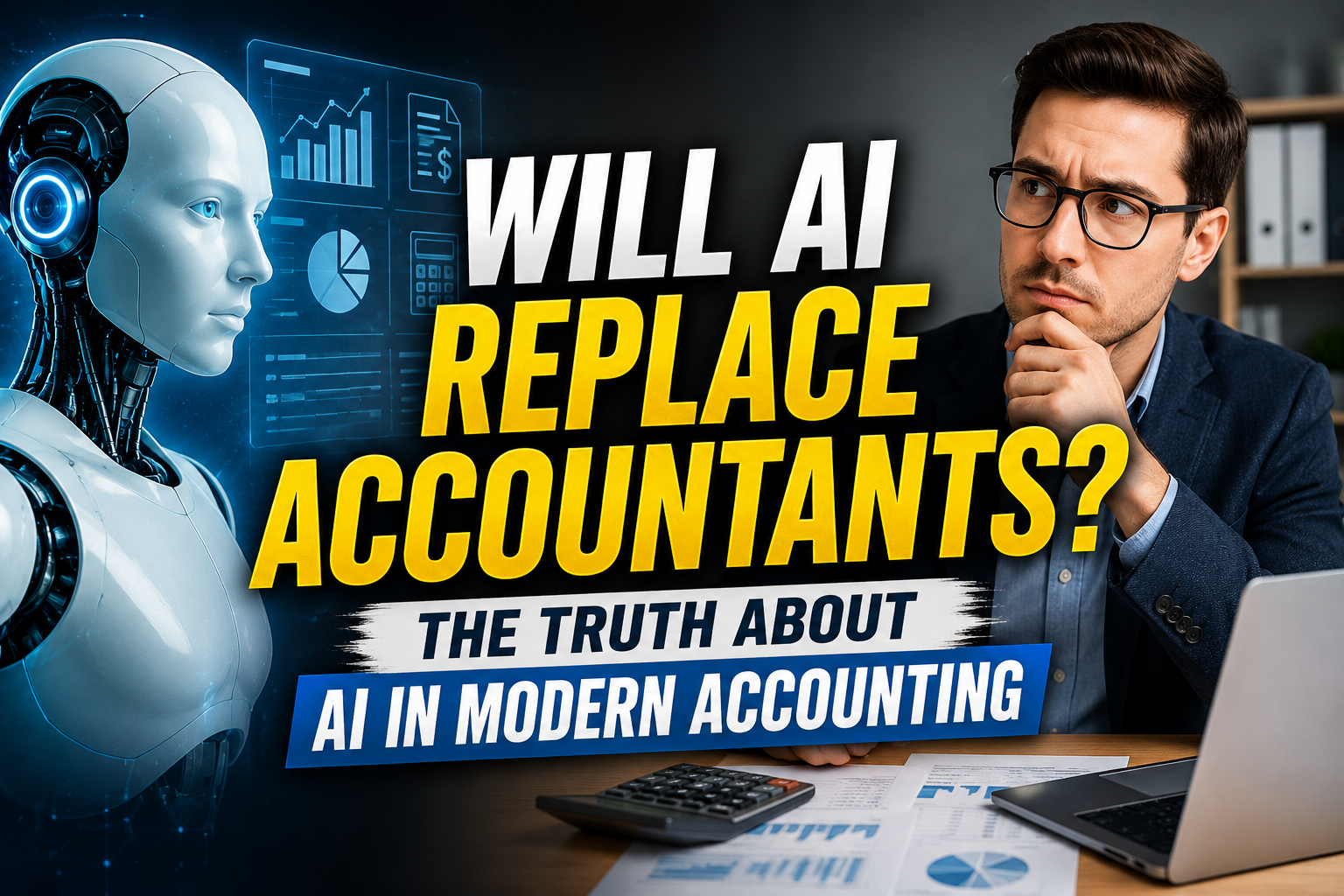
Artificial intelligence is changing nearly every industry, and accounting is no exception. From automated bookkeeping to intelligent tax software, AI tools are becoming more advanced every year. Businesses now use systems powered by deep ai, predictive analytics, and automation to reduce manual work and improve accuracy.
But the big question remains: Will AI replace accountants completely?
The short answer is no — but the role of accountants is evolving fast.
In this article, we’ll explore how AI is transforming accounting, what tasks are being automated, and why human accountants still play a critical role in business and finance.
The Rise of AI in Accounting
Over the past few years, companies have adopted AI-powered tools to streamline financial operations. Modern software can now:
Categorize expenses automatically
Detect fraud patterns
Generate invoices
Predict cash flow trends
Process payroll
Analyze tax data
Produce financial reports in seconds
Many businesses are already using platforms driven by metadata ai and intelligent automation to handle repetitive financial tasks more efficiently than traditional systems.
This shift is helping accountants spend less time on manual calculations and more time on strategy, consulting, and decision-making.
What Accounting Tasks Can AI Automate?
AI excels at repetitive and data-heavy tasks. Here are some accounting functions already being automated:
1. Bookkeeping
AI systems can import transactions, reconcile accounts, and organize financial data automatically.
2. Tax Preparation
Advanced tax software can identify deductions, prepare returns, and reduce calculation errors.
For example, areas like hmrc r&d tax claim transparency ai are becoming increasingly important as governments push for greater compliance and automated reporting standards.
3. Fraud Detection
Machine learning models analyze unusual financial behavior much faster than humans.
4. Invoice Processing
AI can scan invoices, extract information, and process payments instantly.
5. Financial Forecasting
Using predictive algorithms, businesses can estimate future revenue and expenses more accurately.
These innovations save businesses time and reduce operational costs.
Why AI Will Not Fully Replace Accountants
Despite rapid advancements, AI still lacks several human capabilities that are essential in accounting.
Human Judgment Matters
Financial decisions often require interpretation, ethics, and professional judgment. AI can process numbers, but it cannot fully understand business context or human behavior.
Client Relationships Are Important
Businesses rely on accountants for trust, advice, and long-term planning. AI cannot replace strong client communication and strategic guidance.
Complex Regulations Change Frequently
Tax laws and financial regulations evolve constantly. While AI tools can assist with updates, human professionals are needed to interpret and apply regulations correctly.
Strategic Advisory Roles Are Growing
Modern accountants increasingly act as business advisors rather than data entry specialists. They help companies:
Reduce financial risk
Improve profitability
Plan investments
Scale operations
These are areas where human expertise remains critical.
How AI Is Changing the Role of Accountants
Instead of replacing accountants, AI is reshaping the profession.
Accountants who embrace technology are becoming more valuable because they can combine financial expertise with automation tools.
Many firms now use:
Intelligent dashboards
Automated auditing systems
AI reporting assistants
Smart analytics platforms
Some educational platforms, including solutions similar to teach mate ai, are also helping finance professionals learn AI-powered workflows faster.
This means future accountants will likely spend less time on repetitive tasks and more time on high-value consulting work.
The Benefits of AI in Accounting
AI adoption offers several advantages for businesses and accounting professionals.
Increased Accuracy
AI reduces human errors in calculations and reporting.
Faster Processing
Tasks that once took hours can now be completed in minutes.
Cost Savings
Automation lowers operational costs and improves productivity.
Better Insights
AI systems can analyze massive amounts of financial data quickly, helping businesses make smarter decisions.
Improved Compliance
Advanced tools help organizations stay compliant with changing financial regulations.
Even conversational platforms inspired by concepts like chatable ai are beginning to assist businesses with financial support and reporting workflows.
Challenges of AI in Accounting
While AI brings many benefits, there are also concerns businesses must address.
Data Security Risks
Financial information is highly sensitive, making cybersecurity essential.
Dependence on Technology
Overreliance on automation can become risky if systems fail or produce inaccurate outputs.
Lack of Human Understanding
AI still struggles with emotional intelligence, negotiation, and complex business relationships.
Job Transformation
Some entry-level accounting roles may decline as automation increases, but new technology-focused finance roles are also emerging.
Will Accountants Need AI Skills in the Future?
Absolutely.
Future accountants will likely need:
Data analysis skills
AI software knowledge
Automation workflow understanding
Strategic consulting abilities
Professionals who combine accounting expertise with technology skills will have a strong competitive advantage.
Even newer trends connected to terms like days ai and AI productivity systems show how rapidly automation tools are influencing professional industries.
Final Verdict: Will AI Replace Accountants?
AI will transform accounting, but it will not completely replace accountants.
Instead, AI will automate repetitive tasks while human professionals focus on:
Strategy
Advisory services
Relationship management
Financial planning
Complex decision-making
The future belongs to accountants who adapt and learn how to work alongside AI technologies rather than compete against them.
Businesses still need trusted financial experts — and that human element remains impossible to automate fully.