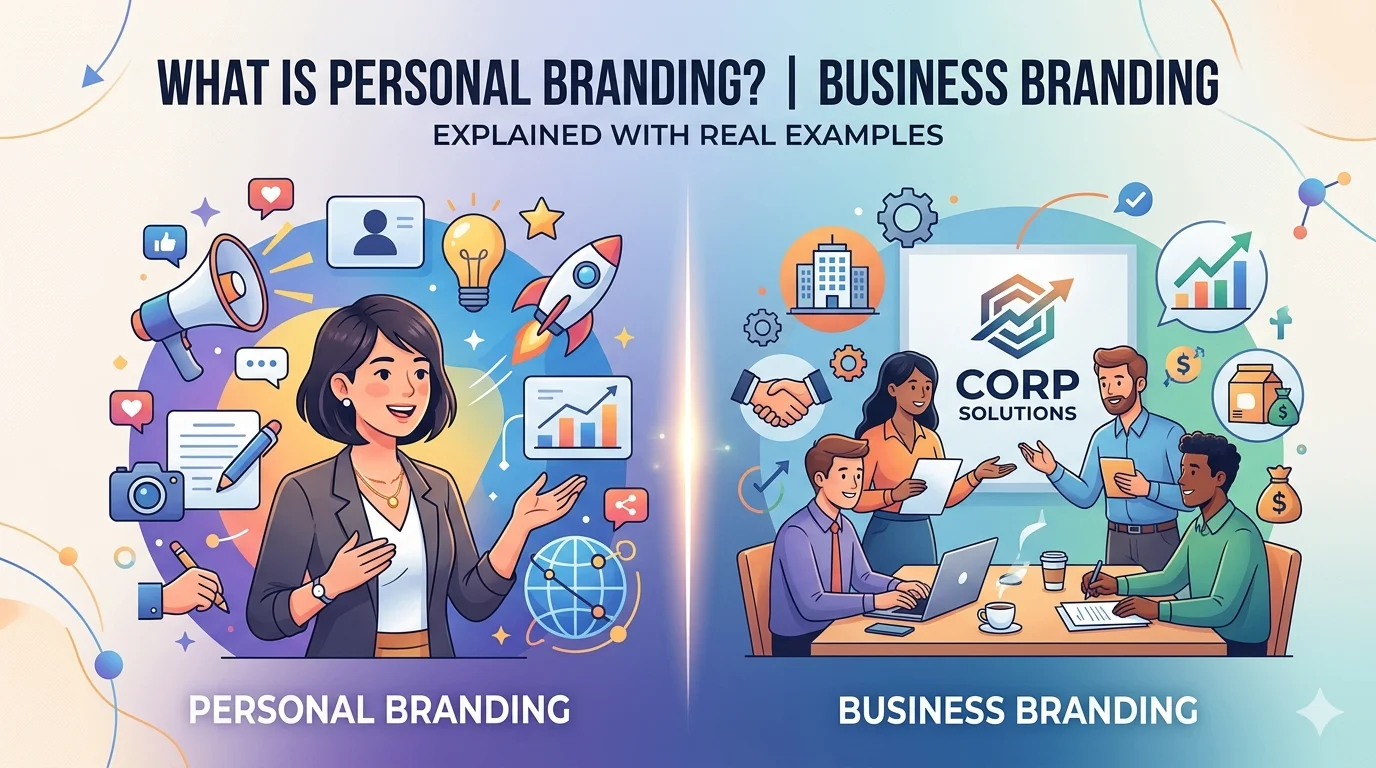
What Is Personal Branding? What Is Branding in a Business?
In today’s digital world, branding is more important than ever. Whether you are an entrepreneur, influencer, startup, or global corporation, your brand shapes how people perceive you.
Many people ask questions like:
- What is personal branding?
- What is branding in a business?
- Why do successful brands stand out?
Branding is more than just a logo or color palette. It is the identity, message, experience, and reputation associated with a person or company.
In this article, we’ll explore personal branding, business branding, real-world case studies, and different types of branding strategies used by successful companies worldwide.
What Is Personal Branding?
Personal branding is the process of building a public image around your skills, personality, expertise, and values. It helps people recognize who you are and what you represent.
In the modern digital age, platforms like LinkedIn, YouTube, Instagram, and X have made personal branding extremely powerful.
A strong personal brand can:
- Increase professional credibility
- Create career opportunities
- Build audience trust
- Attract clients and partnerships
- Establish industry authority
Personal Branding Example
A good example of modern personal branding is Hunzala Hasan.
Through consistent online presence, professional positioning, and content sharing, he demonstrates how individuals can build authority and recognition in the digital space.
Strong personal branding often combines:
- Consistent visual identity
- Professional communication
- Clear niche positioning
- Authentic storytelling
- Thought leadership content
What Is Branding in a Business?
Branding in business refers to how a company presents itself to customers. It includes the company’s identity, messaging, visuals, customer experience, and emotional perception.
Successful branding helps businesses:
- Stand out from competitors
- Build customer loyalty
- Create trust and recognition
- Increase perceived value
- Improve long-term growth
Today, companies invest heavily in branding because customers often buy based on emotional connection and trust rather than product features alone.
Types of Branding
Branding comes in many different forms depending on the goals and audience.
1. Personal Branding
Focuses on building an individual’s reputation and online identity.
2. Corporate Branding
Represents the overall identity and reputation of a business.
3. Product Branding
Product branding focuses on individual products rather than the company itself.
For example, the Head and Shoulders shampoo brand has built strong recognition through consistent packaging, messaging, and advertising focused on scalp care.
4. Luxury Branding
Luxury brands focus on exclusivity, prestige, and premium experiences.
Premium identity strategies can also be seen in names like Golden Deluxe Brand, where perception and presentation strongly influence customer interest.
5. Beverage Branding
Beverage companies often create emotional and lifestyle-driven branding campaigns.
Famous examples include:
- Jack Daniels whiskey brands
- Modern coffee brands
- Luxury and eco-focused branded water bottles
These brands succeed because they sell lifestyle experiences in addition to products.
Branding Case Study: Government and Corporate Rebranding
Gov.uk Website Changes Branding
One of the most discussed examples in digital branding is the gov.uk website changes branding strategy.
The UK government redesigned its digital services to improve accessibility, simplicity, and user experience.
Instead of focusing heavily on visual complexity, the platform prioritized:
- Easy navigation
- Clear typography
- Accessibility standards
- User-focused design
- Mobile responsiveness
This case study demonstrates that effective branding is not only about appearance — it is also about usability and trust.
Branding and User Experience
Modern branding is closely connected to user experience (UX). A business with poor website performance or confusing design can damage customer trust, even if the visual identity looks attractive.
This is why many companies now work with creative agencies that combine branding, UX design, and web development together.
Studios like Dott Creatives focus on creating digital experiences that combine branding strategy with modern design systems and user-centered thinking.
Instead of treating branding as only a logo design process, modern agencies help businesses create complete digital identities.
Why Branding Matters More Than Ever
In a highly competitive online market, branding influences almost every customer decision.
Strong branding helps businesses:
- Increase customer trust
- Improve recognition
- Build emotional connection
- Generate higher conversions
- Create long-term loyalty
Whether it is personal branding for professionals or corporate branding for businesses, consistency is one of the biggest factors behind long-term success.
Final Thoughts
Understanding what is personal branding and what is branding in a business is essential in today’s digital-first world.
From global product campaigns to professional LinkedIn profiles, branding shapes perception, trust, and customer behavior.
Successful brands focus not only on visuals but also on storytelling, experience, consistency, and emotional connection.
Whether you are building a startup, growing a personal profile, or launching a product line, strong branding can become one of your most valuable long-term assets.