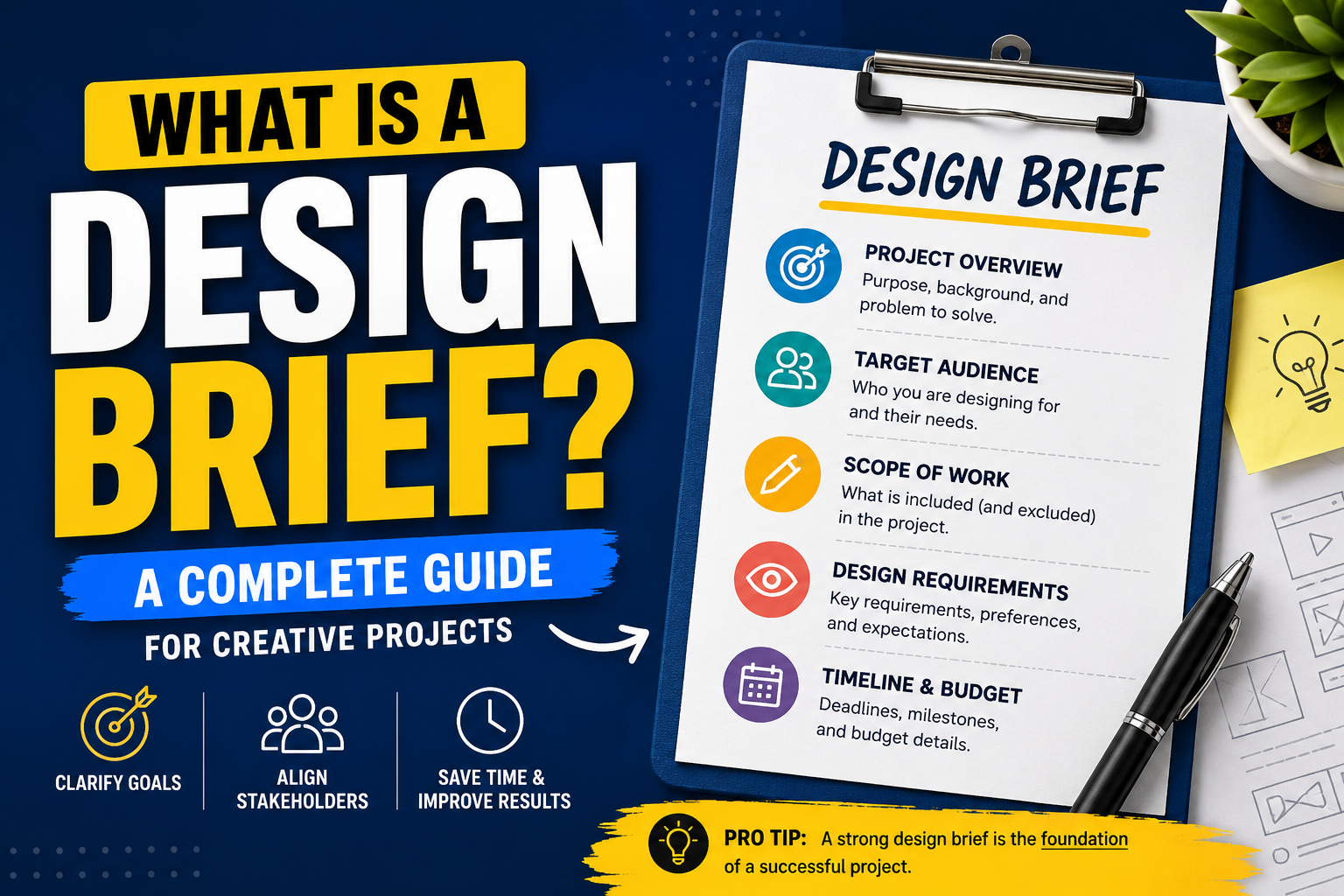
A Complete Guide for Creative Projects
A successful creative project starts with a clear plan, and that plan usually begins with a design brief. Whether you are working on branding, a website, packaging, or marketing materials, a strong brief helps designers and clients stay aligned from start to finish.
But many people still ask: What is a design brief?
In simple terms, a design brief is a document that explains the goals, requirements, and expectations of a design project. It acts as a roadmap for both the client and the designer.
In this article, we’ll explain the design brief definition, why it matters, and how to create one effectively.
Design Brief Definition
A design brief is a written document that outlines the objectives, scope, style, audience, and deliverables of a design project.
It provides all the important information a designer needs before starting work. A good brief reduces confusion, improves communication, and increases the chances of delivering successful results.
The purpose of briefing design projects properly is to ensure everyone understands:
- The project goals
- The target audience
- Brand requirements
- Deadlines
- Budget expectations
- Creative direction
Without a clear brief, projects can easily face delays, misunderstandings, and revisions.
Why Is a Design Brief Important?
A well-structured creative brief helps both clients and designers work more efficiently.
Better Communication
A design brief keeps everyone on the same page from the beginning.
Saves Time
Clear instructions reduce unnecessary revisions and back-and-forth discussions.
Defines Project Goals
It helps designers understand the purpose behind the project instead of just focusing on visuals.
Improves Creativity
When designers fully understand the brand and objectives, they can create more effective and strategic designs.
Reduces Mistakes
A strong graphic design brief minimizes misunderstandings and helps avoid costly errors.
What Should Be Included in a Design Brief?
A professional design brief usually contains several key sections.
1. Project Overview
Explain what the project is about and why it is needed.
- New logo design
- Website redesign
- Product packaging
- Social media campaign
2. Business Background
Provide information about the company, brand values, and industry.
3. Objectives and Goals
Clearly define what the project should achieve.
- Increase brand awareness
- Improve website conversions
- Modernize brand identity
- Attract younger customers
4. Target Audience
Describe the ideal audience for the design.
- Age group
- Interests
- Location
- Buying behavior
5. Design Requirements
This section explains technical or visual requirements such as:
- Brand colors
- Fonts
- Layout preferences
- Image style
- File formats
6. Competitor References
Sharing examples of competitors or preferred styles can help guide the creative direction.
7. Timeline and Deadline
Mention project milestones and final delivery dates.
8. Budget
A budget helps designers understand the project scope and available resources.
Difference Between a Design Brief and a Creative Brief
Many people confuse a design brief with a creative brief, but they are slightly different.
Design Brief
Focuses mainly on the visual and technical requirements of the project.
Creative Brief
Covers broader marketing and strategic goals, including messaging, branding, and campaign direction.
In many projects, both documents work together to guide the creative process.
How to Write an Effective Graphic Design Brief
Creating a successful graphic design brief does not have to be complicated. Here are some useful tips.
Be Clear and Specific
Avoid vague instructions. Clearly explain your expectations.
Focus on Goals
Tell the designer what the project should accomplish.
Share Brand Guidelines
Provide logos, fonts, colors, and existing brand assets whenever possible.
Include Examples
Visual references can help communicate your preferred style.
Keep It Organized
Use headings and bullet points to make the brief easy to understand.
Common Mistakes in Design Briefs
Many projects fail because the brief lacks important information.
- Unclear objectives
- Missing deadlines
- No target audience details
- Too many conflicting ideas
- Lack of visual references
- Ignoring budget limitations
A detailed and organized brief can prevent most of these issues.
Who Uses Design Briefs?
Design briefs are used across many creative industries.
Professionals who commonly use them include:
- Graphic designers
- Web designers
- Branding agencies
- Marketing teams
- UX/UI designers
- Freelancers
- Advertising agencies
Whether it’s a small startup or a large corporation, proper briefing design projects improves workflow and final results.
Final Thoughts
A strong design brief is one of the most important parts of any creative project. It provides direction, improves communication, and helps designers create work that matches business goals.
Understanding the proper design brief definition and learning how to create an effective graphic design brief can save time, reduce revisions, and improve project success.
Whether you are a business owner, marketer, or designer, investing time in a clear creative brief is always worth it.